Logbook
The Best Amalfi Coast Beaches You Can Only Reach by Boat
Furore's fjord, Duoglio's deep water, the swim-through arch at Santa Croce, Praiano's twin coves and the sea caves between the towns: a practical, honest guide to the Amalfi Coast beaches that are best, or only, reached from the water.
- Furore Fjord
- About 25 m of shingle under a 30 m bridge; summer venue for high-diving contests
- Duoglio beach
- Roughly 400 steps from the SS163, or 5 minutes by boat from Amalfi
- Santa Croce
- Natural sea arch you can swim through; no road access, boat or footpath only
- Beach type
- Mostly pebble and shingle with deep, clear water; bring water shoes
Why the Amalfi Coast saves its best beaches for the sea
The Amalfi Coast is a wall of limestone cliffs dropping straight into the Tyrrhenian Sea. The famous towns cling to narrow ledges, and the coastline between them is broken only by gorges where mountain streams have cut tiny coves down to the water. Many of these beaches have no road at all, just a long staircase or no land access whatsoever. From a boat they sit minutes apart, with deep, glass-clear water right off the shingle.
Because the coastline is so vertical, the beaches are pocket-sized and almost all pebble rather than sand, but the trade-off is water that stays deep and transparent up to the shore. A boat turns a string of hard-to-reach coves into an easy afternoon, which is exactly what an Amalfi Coast boat tour is built around: less walking, more swimming, and the freedom to move with the light and the crowds.
Fiordo di Furore: a beach at the bottom of a gorge
Carved between Amalfi and Positano, the Fiordo di Furore is the coast's strangest beach: a ribbon of shingle barely 25 metres wide at the bottom of a deep gorge cut by the Schiato stream. A 30-metre stone bridge arches overhead, and each summer it becomes a platform for an international high-diving competition. The old stone houses on the rock, the 'monazeni', once sheltered fishermen, and in the late 1940s the hamlet drew director Roberto Rossellini and actress Anna Magnani to film here.
On land you reach it down a long staircase from the SS163 coast road, and in July and August the little beach fills quickly. Arriving by sea is easier and far more atmospheric: you glide into the narrow inlet, drop anchor in deep emerald water and swim toward the beach beneath the bridge. Early morning, before the day-trippers descend the steps, is the moment to be there.
Duoglio: Amalfi's deep-water escape
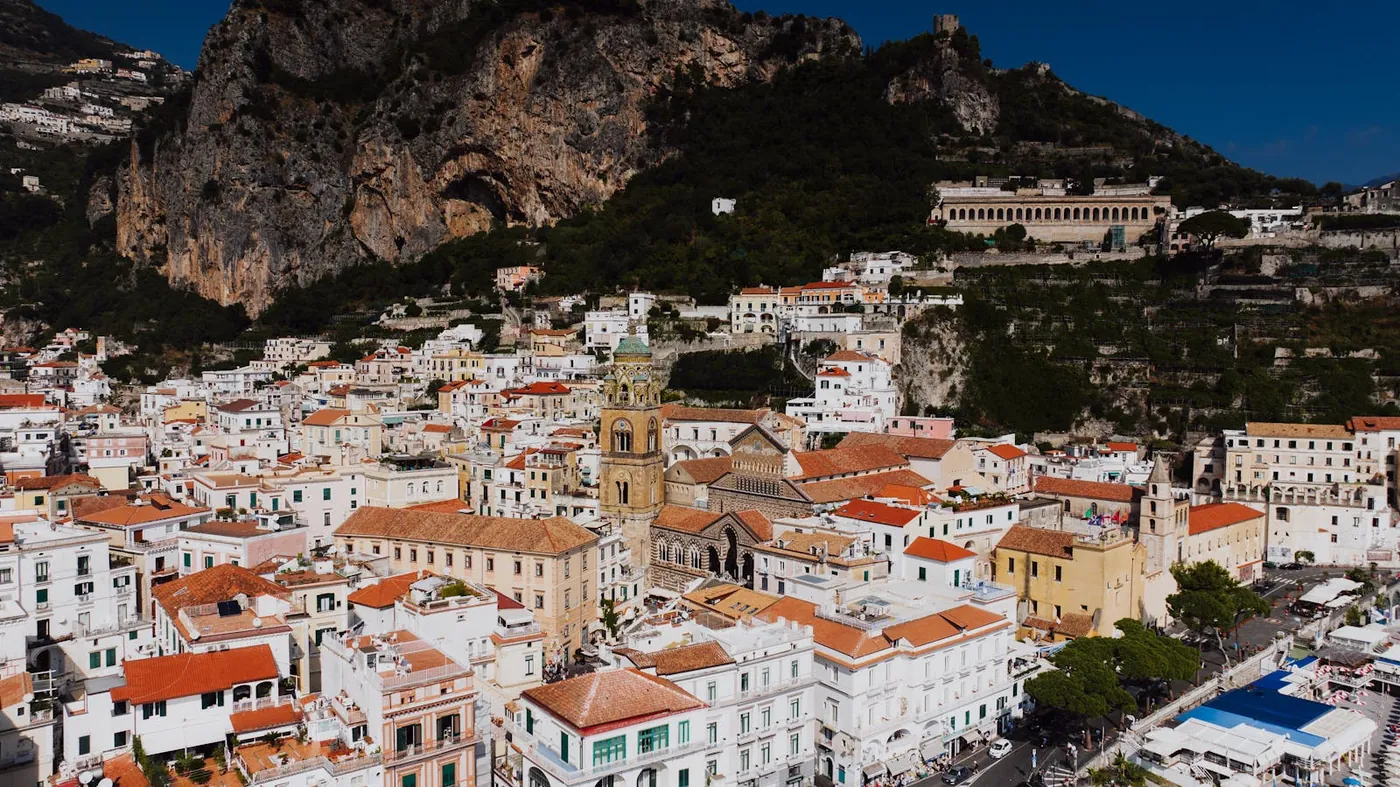
About 1.5 kilometres west of Amalfi, Duoglio is a long pebble beach backed by terraced cliffs. From the SS163 it is a descent of roughly 400 steps; by boat it is barely five minutes from Amalfi's harbour, which is why so many people arrive by sea. Part of the beach is free and part is run by beach clubs with loungers and a couple of simple restaurants. The water is deep, cool and exceptionally clear, ideal for a long swim or a snorkel along the rocks at either end.
Santa Croce and its swim-through arch
A little farther west, just before Capo di Conca, Santa Croce has no road at all, only a steep footpath or, more sensibly, a boat. Its signature is the Arco di Santa Croce, a natural rock arch standing in the sea a short swim from the shingle; gliding through it is the thing everyone comes here to do. There are a few beach clubs tucked under the cliff, but the real draw is the clear, deep water and the quiet that comes with being hard to reach.
Praiano's two coves: Marina di Praia and La Gavitella
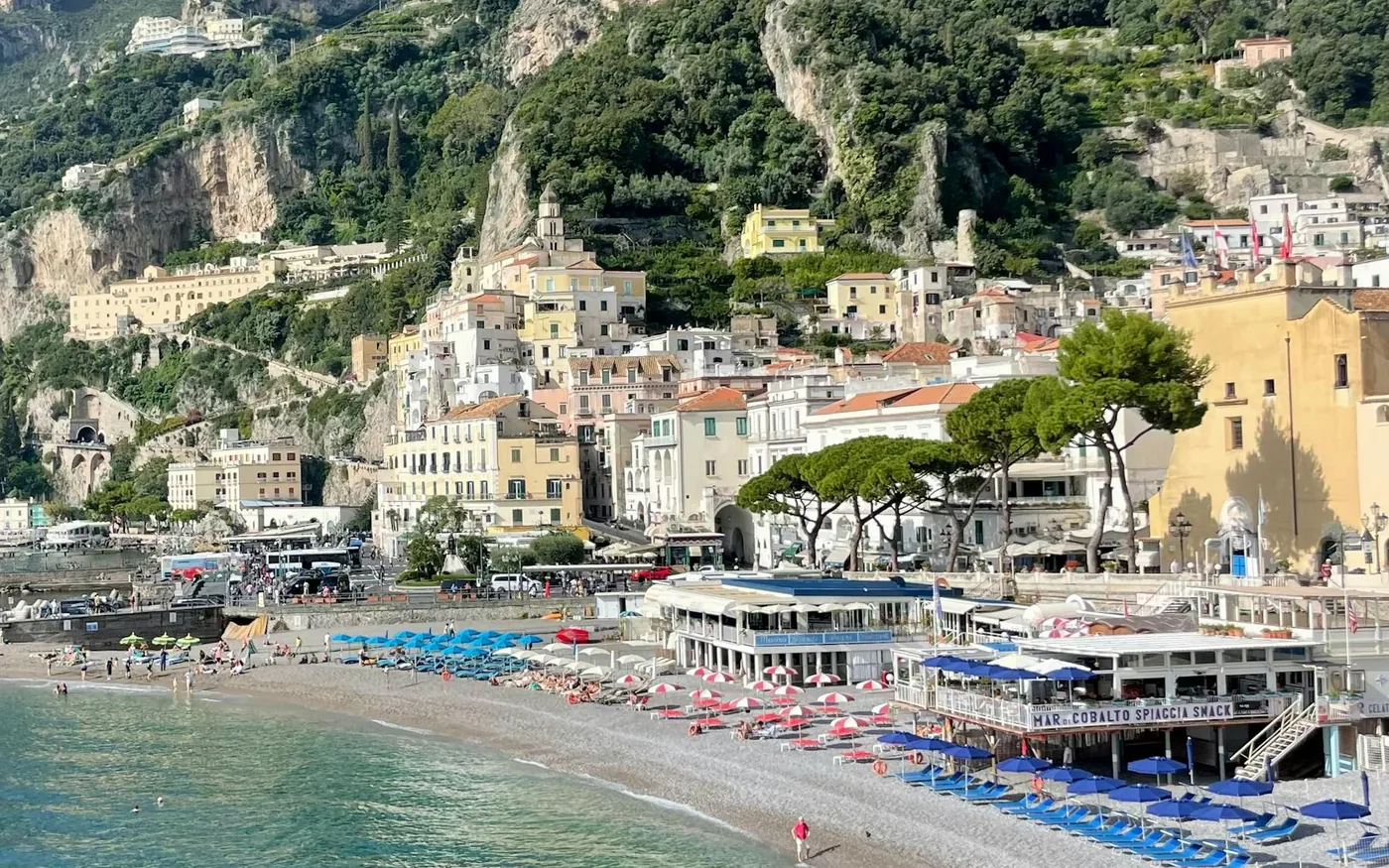
Praiano, between Positano and Amalfi, has only a couple of beaches, and both are special. Marina di Praia sits in a narrow ravine where fishing boats are still pulled up on the shingle and a handful of restaurants line the water. Above it stands the Torre a Mare, a 16th-century Saracen watchtower now used as an art studio, while a legendary nightclub built into a sea cave has drawn dancers to the rock since the 1960s.
A short walk or boat hop away, La Gavitella faces the opposite way to almost everywhere else on the coast, due west, so it keeps the sun all day and looks straight across at Positano and Capri. It is reached by a long staircase or a free shuttle boat from Marina di Praia, and its clubs make it an obvious place to end an afternoon. For the same reason it is a favourite finish for an Amalfi Coast sunset cruise.
Positano beyond the postcard: Fornillo, Arienzo, Laurito
Positano's main beach, Spiaggia Grande, is the picture everyone knows, but the better swims are just around the cliffs. Fornillo, reached by a seafront path or a one-minute boat ride, is quieter and shaded in the afternoon. East of town, Arienzo is the famous '300 steps' beach, catching the morning sun, while tiny La Porta hides caves once used in prehistory. Laurito, farther east, is home to a cult beachfront trattoria served by its own little shuttle boat. All of them are simplest by water, the natural shape of a Positano boat tour.
The coves and caves you can only reach from the water
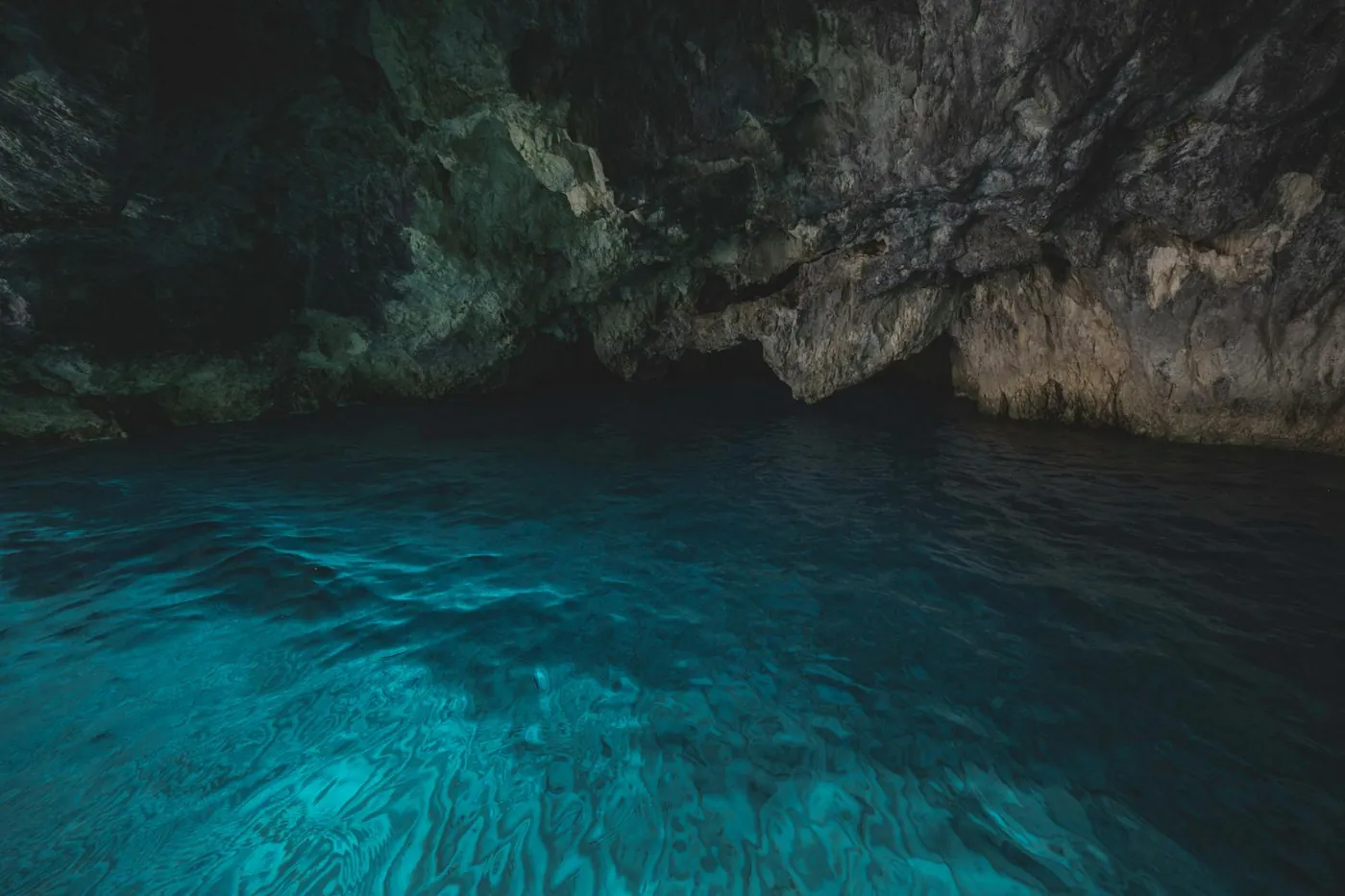
Between the beaches, the cliffs are pierced by sea caves and inlets that only a boat can enter. The best known is the Grotta dello Smeraldo at Conca dei Marini, where light filtering up through an underwater opening turns the whole cavern a vivid emerald green; a ceramic nativity scene rests on the seabed below. You can reach it by lift from the road, but arriving by boat and drifting in is the original way to see it.
Below the village of Conca dei Marini lies its own small marina beach, and all along the coast there are unnamed coves and rock ledges with no name on any map: pockets of shade and deep water perfect for a swim stop. This is where a nimble boat earns its keep, nosing into inlets a larger vessel would pass by, with a mask and fins ready on deck.
How to plan an Amalfi Coast beach day by boat
The season runs from June to September, with the warmest sea from late July onward; May and early October are quieter but cooler. Start early to reach the small beaches before the crowds, and keep midday for swim stops offshore when the sun is fiercest. Pack water shoes for the pebbles, reef-safe sunscreen, a mask and a light layer for the breeze on the way back. Most coves have deep water for anchoring or a buoy field nearby.
Doing it by boat is what makes the difference: in a single day you can link Furore, Duoglio, Santa Croce and Praiano's coves, swimming wherever the water looks best and skipping the long staircases entirely. With a skipper handling navigation and timing, you simply choose where to stop. It is the relaxed, flexible way to see the coast, and the heart of a private Amalfi Coast boat tour.
Frequently asked
Which Amalfi Coast beaches can you only reach by boat?
Santa Croce, the Furore fjord beach, Laurito and several unnamed coves between the towns have no road access, only a steep staircase or, more easily, the sea. Duoglio, Fornillo and La Gavitella can be walked to but are far quicker and quieter when you arrive by boat.
Are the beaches sandy or pebbly?
Almost all Amalfi Coast beaches are pebble or shingle, not sand. The upside is exceptionally clear, deep water right off the shore. Bring water shoes for comfort getting in and out, especially at Furore, Duoglio and Santa Croce, where the stones are larger.
Is the Furore fjord worth visiting?
Yes. It is one of the coast's most dramatic spots, a sliver of beach at the foot of a gorge spanned by a 30-metre bridge. It is tiny and gets crowded in peak season, so arriving by boat early, when you can swim into the fjord under the bridge, is the best way to experience it.
Can you swim through the arch at Santa Croce?
Yes. The Arco di Santa Croce is a natural rock arch a short swim from the beach, and passing through it is the classic thing to do here. The water is deep and clear, and a mask and snorkel make it even better. Be mindful of other swimmers and any passing boats.
When is the best time of year to visit the beaches by boat?
June to September, with the warmest sea from late July through September. July and August are busiest, so early mornings and late afternoons are calmer. May and early October are quieter and pleasant, though the water is noticeably cooler for swimming.
How many steps lead down to Duoglio beach?
Around 400 steps drop from the SS163 main road to Duoglio, which is one reason many visitors arrive by boat instead, about five minutes from Amalfi's harbour. The climb back up in the summer heat is the main deterrent for those on foot.
Which beach is best for sunset?
La Gavitella in Praiano is the only beach on the coast that faces west, so it catches the sun all day and looks straight at Positano and Capri at sunset. It is reachable by steps or a short hop by boat, making it a natural finish to a day spent on the water.
See the Amalfi Coast's best beaches from the water
Spend a day stringing together Furore, Duoglio, Santa Croce and Praiano's coves on a private boat with skipper, swimming, snorkelling and stopping wherever the water looks best. Message us on WhatsApp at +39 389 311 4784 or send a request through the form and we'll help you plan the itinerary around the weather and the crowds.