Logbook
Snorkeling on the Amalfi Coast and Capri: Best Spots, Sea Caves and Skipper Tips
A practical guide to snorkeling the Amalfi Coast and Capri: the clearest coves, the Faraglioni and sea caves, the Punta Campanella marine reserve, the gear you'll find on board, and how a skipper keeps it all safe.
- Best season
- June–September; sea ~25–27°C in August, visibility up to 20–30 m on calm days
- Punta Campanella reserve
- Established 1997, ~40 km of coast, zoned A/B/C (no-take Zone A)
- Vervece pinnacle
- Submerged bronze Madonna at about 12 m off Nerano/Marina del Cantone
- Gear provided on board
- Masks, snorkels, fins, floats, swim ladder and freshwater shower
Why the Amalfi Coast and Capri are made for snorkeling
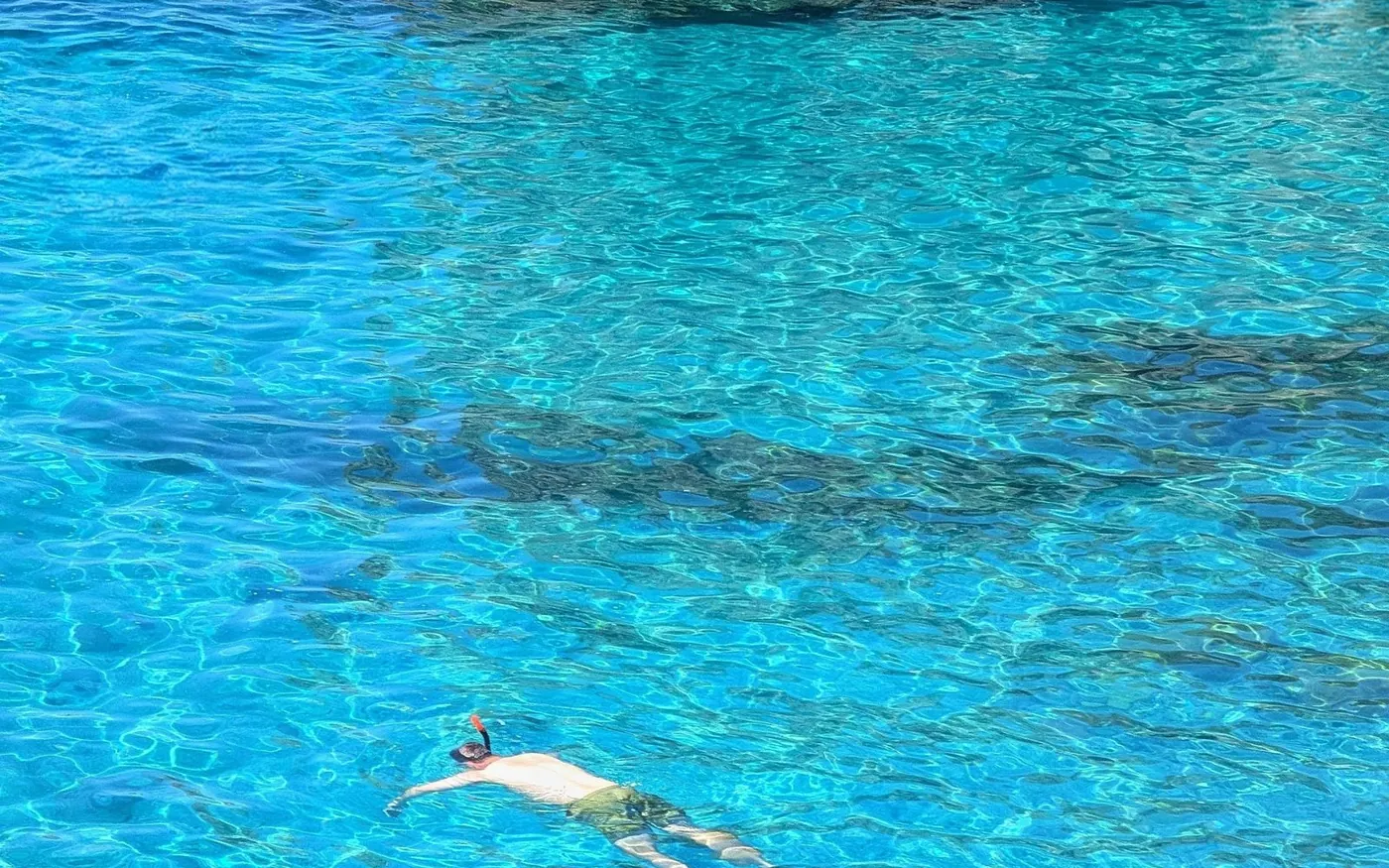
The Sorrentine Peninsula and Capri are built of limestone that drops straight into deep, clear water, so even a few metres from shore you find rocky reefs, sea caves and seagrass meadows instead of murky sand. From roughly June to September the sea warms to a comfortable 24–27°C and, on calm days, visibility can reach 20–30 metres. Snorkeling here is less about coral and more about dramatic underwater rock, light filtering through grottoes, and the fish that shelter around the stacks and headlands.
Best snorkeling spots around Capri
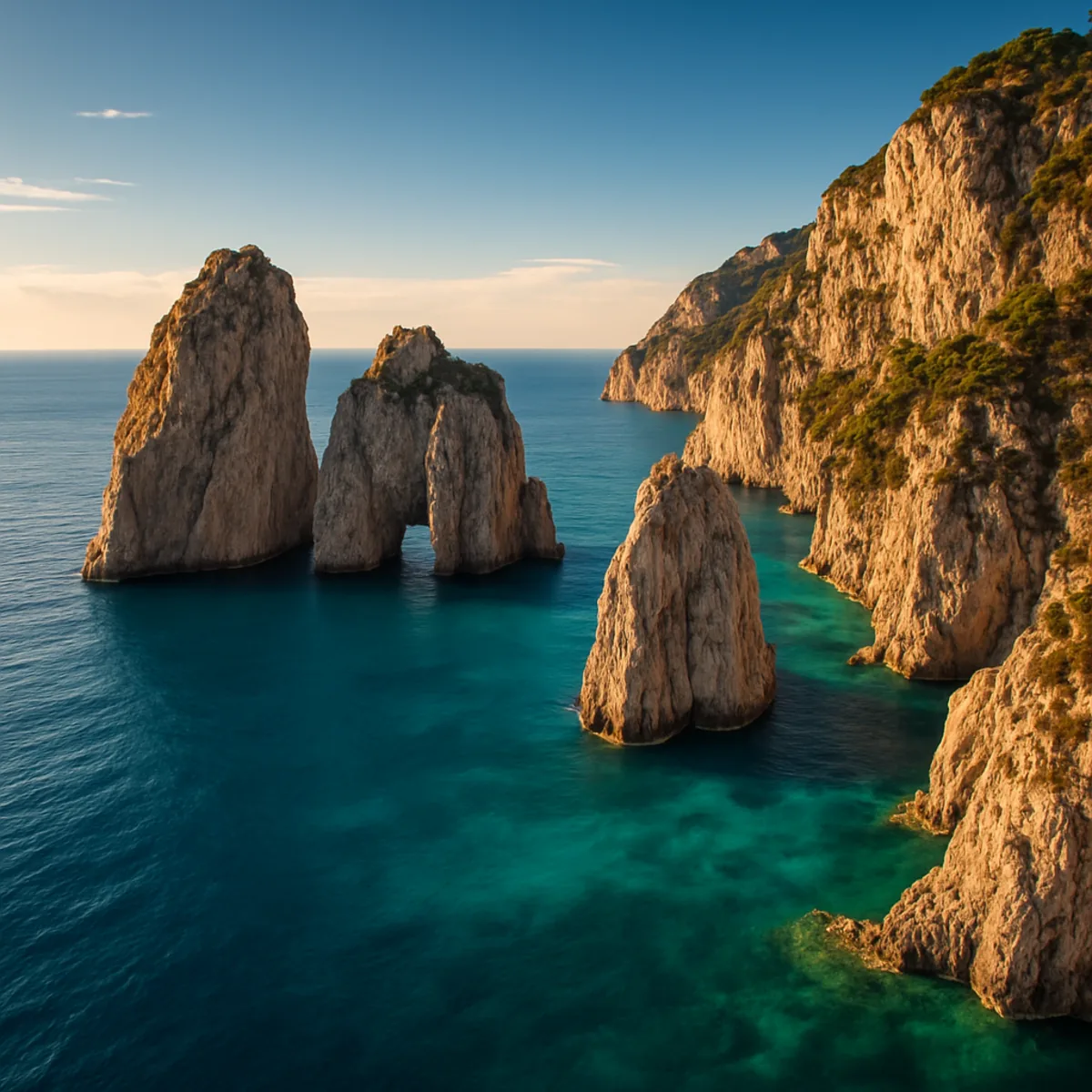
Capri's most rewarding snorkeling is around the Faraglioni, the three rock stacks off the south-east coast. The water around the Faraglione di Mezzo, with its natural sea arch, and the outer Scopolo is clear and full of life, while nearby Marina Piccola offers sheltered swimming. On the quieter south-west tip, the rocky coves below the Punta Carena lighthouse reward those who want fewer crowds and healthy fish populations.
On the north coast, Bagni di Tiberio is a shallow, protected bay where you can snorkel over the submerged remains of a Roman villa. The Green Grotto (Grotta Verde) and White Grotto (Grotta Bianca) near Punta di Tragara are best explored around their mouths, where filtered light turns the water a glowing emerald. A relaxed private boat day around the island lets you reach these in sequence without queuing.
Sea caves: what you can and can't snorkel
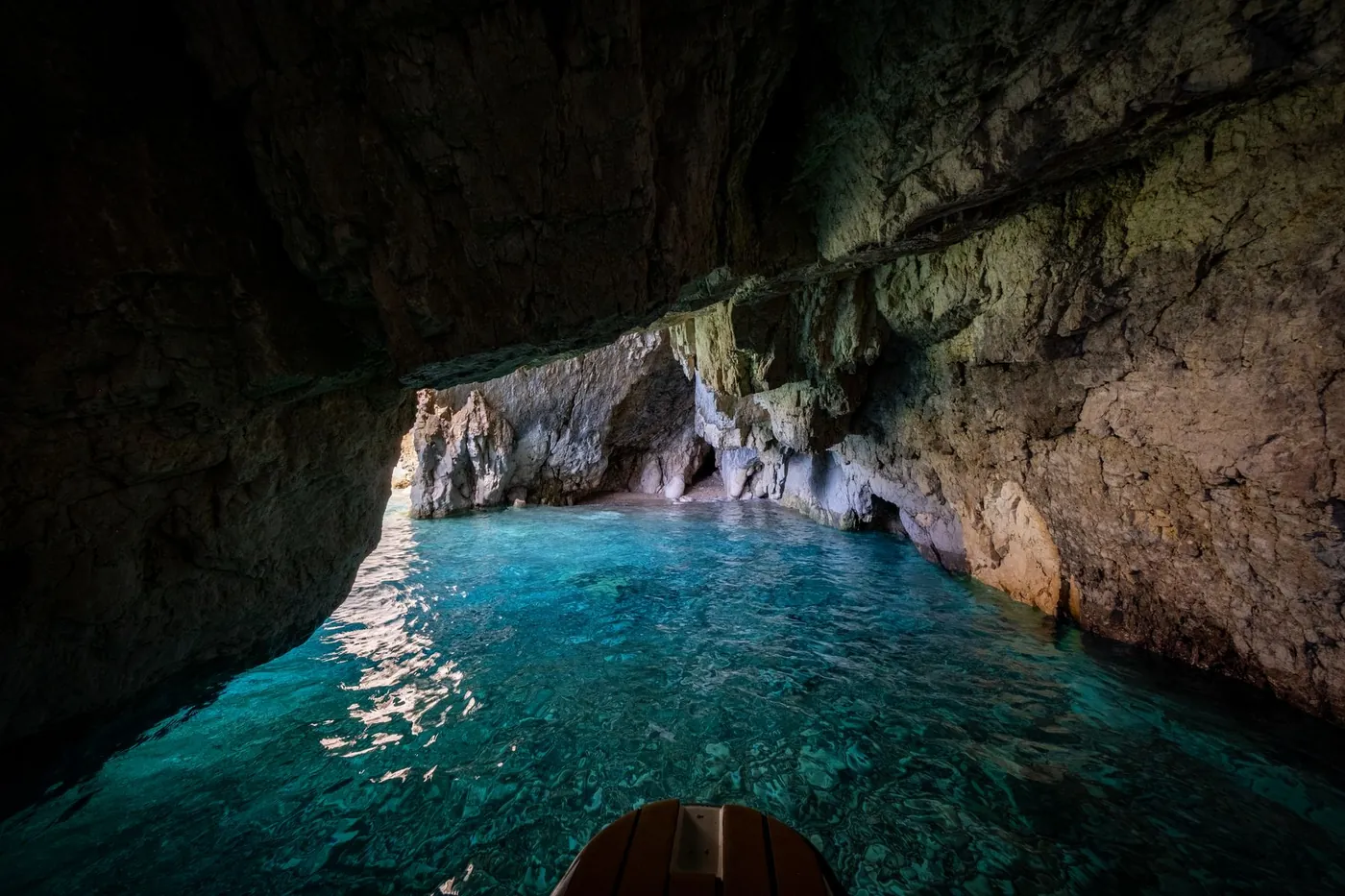
The coast's two famous caves are seen, not snorkeled. Capri's Blue Grotto (Grotta Azzurra) is entered by small rowboat and swimming inside is not permitted during opening hours, while the Emerald Grotto (Grotta dello Smeraldo) at Conca dei Marini is a managed boat visit. Treat both as sightseeing stops rather than snorkel sites, and save your fins for the open coves and rock arches nearby.
Smaller grottoes and arches along the Amalfi cliffs are different: many can be approached by boat and snorkeled around the entrance, where you find cool, shaded water and curious fish. A skipper who reads the swell and the light will time these stops so the colours are at their best and the sea is calm enough to get in safely.
The Punta Campanella marine reserve, Ieranto and Vervece
At the tip of the peninsula between Capri and Positano lies the Punta Campanella Marine Protected Area, established in 1997 over roughly 40 km of coast. It is divided into Zone A (a no-take integral reserve), Zone B and Zone C, with rules that protect the seagrass and rebuild fish stocks. The payoff for snorkelers is some of the clearest, liveliest water in the region, as long as you respect the zoning and mooring rules.
Inside the reserve, Baia di Ieranto — a quiet bay facing Capri, cared for by the FAI — has glassy water over posidonia meadows and is ideal for unhurried snorkeling. Off nearby Marina del Cantone, the Vervece pinnacle is the area's signature site: scuba divers reach a bronze Madonna at about 12 metres, while snorkelers enjoy the shallow rock and its shoals of fish from the surface. The reserve is most easily reached by boat from the Sorrento side.
Snorkeling spots along the Amalfi Coast
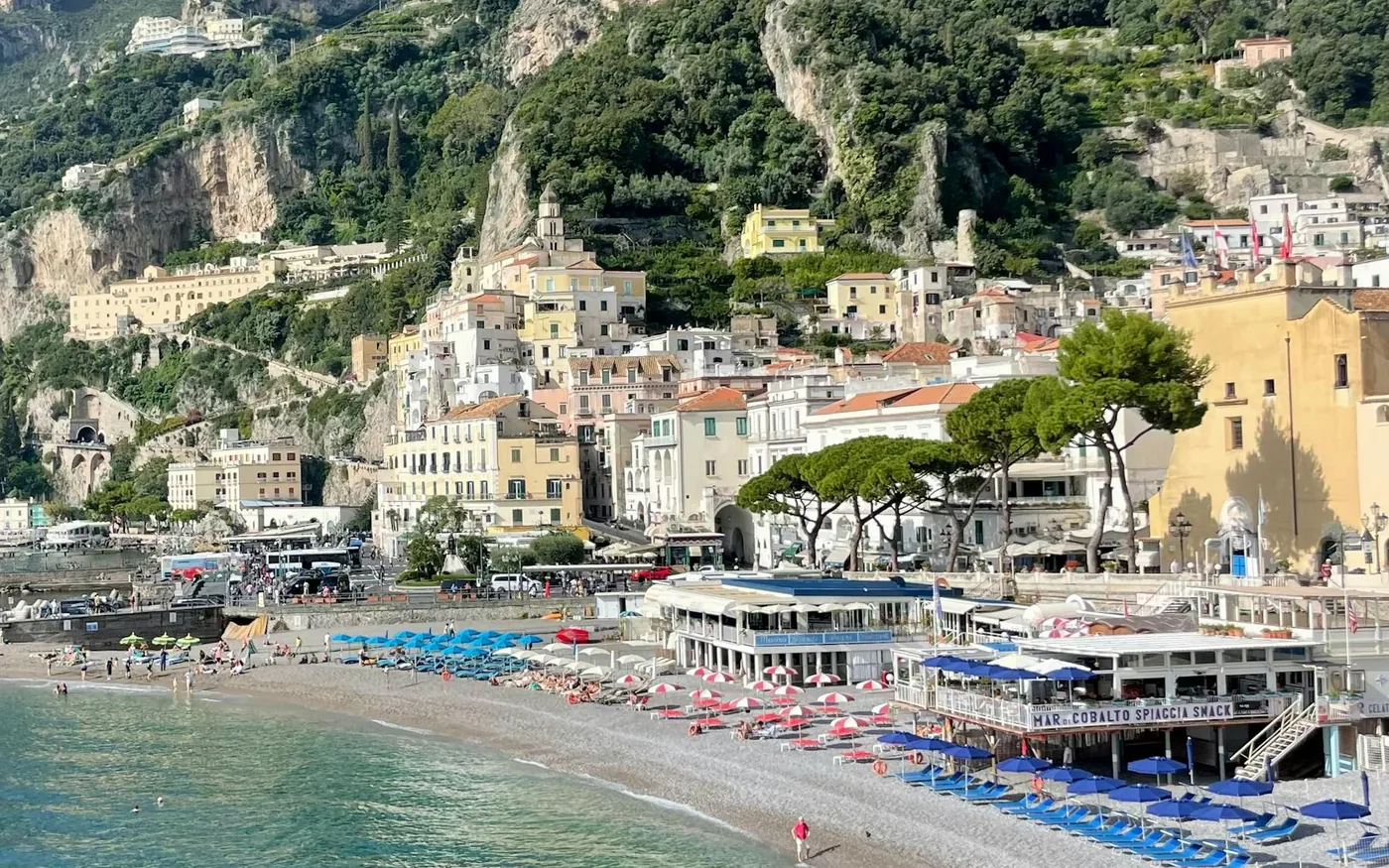
Off Positano, the Li Galli islets rise from deep blue water; landing is private, but snorkeling around the rocks is excellent, with steep drop-offs and plenty of fish. Along the Praiano–Furore stretch, small coves and the dramatic Fiordo di Furore offer sheltered swims between the cliffs, while the coves around Conca dei Marini have clear water and shaded overhangs that are perfect for a quick mask-and-snorkel stop between cruising and lunch.
What marine life you'll actually see
Don't expect a tropical reef, but the Mediterranean here is far from empty. Over the rocks you'll see clouds of damselfish (castagnole), bright wrasse, sea bream and salema, with octopus, moray eels and the occasional grouper hiding in the protected zones. Beneath you, meadows of Posidonia oceanica — a protected seagrass, not algae — oxygenate the water and shelter juvenile fish. Move slowly, keep your hands to yourself, and the wildlife will come to you rather than scatter.
Gear provided on board and how a snorkel day works
On a private charter the kit is already aboard: masks, snorkels and fins in a range of sizes, plus floats or pool noodles, a boarding ladder and a swim platform that make jumping in and climbing out effortless. A freshwater shower rinses off the salt afterwards. You don't need to pack anything bulky — just bring a swimsuit, a towel, reef-safe sunscreen and, if you wear glasses, your own prescription mask.
A typical day mixes a couple of snorkel stops with cruising, swimming and lunch. The skipper reads the wind, chooses sheltered clear-water coves, anchors safely or picks up a mooring buoy, and gives a short briefing before everyone gets in. Because the boat moves with you, there's no long swim from a crowded beach to reach the good water — you start each stop right on top of it.
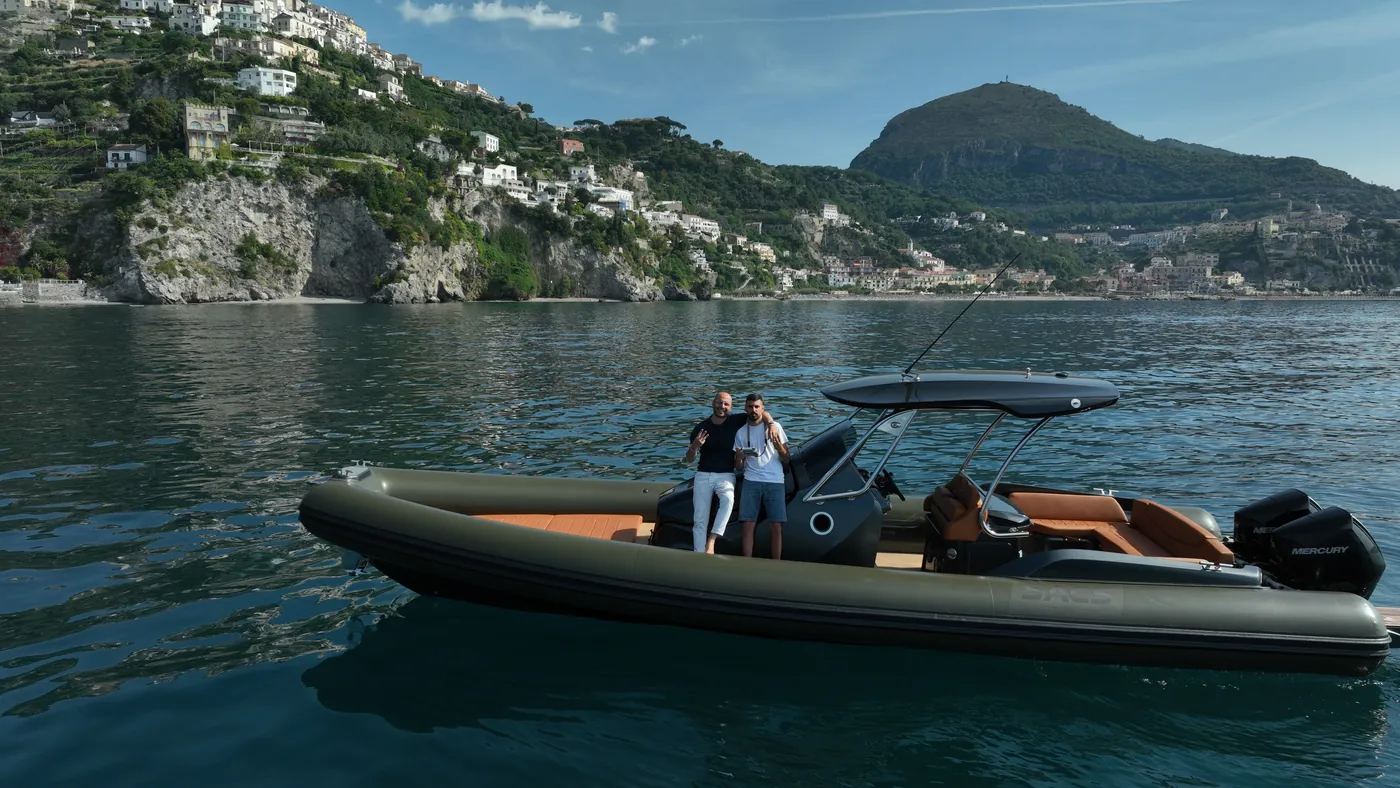
Staying safe snorkeling with a skipper
The Amalfi Coast is busy with ferries, tenders and day boats, so snorkeling safely is mostly about being seen and staying clear of traffic. With a skipper aboard, the engine is off whenever swimmers are in the water, a dive/swimmer flag is displayed, and someone is always watching from the deck. The captain knows the currents, the ferry lanes and the wind, and keeps the group within a safe radius of the boat.
Floats and life vests are available for weaker swimmers and children, and the no-engine rule plus a guarded propeller remove the biggest risks. Snorkel in pairs, stay between the boat and the shore where you're told to, and you can relax in the water while the skipper handles the seamanship and keeps an eye on passing traffic.
Plan your snorkel day responsibly
A few simple habits keep these waters worth visiting: never anchor on posidonia (use mooring buoys), don't touch or collect anything, give the no-entry Zone A of Punta Campanella a wide berth, and wear mineral, reef-safe sunscreen. Aim for calmer morning seas and the warmer months, and build in flexibility so your skipper can chase the clearest water on the day rather than forcing a fixed itinerary.
Exploring by private boat is the easiest way to link Capri's stacks, the Ieranto reserve and the hidden coves of the Amalfi Coast in one relaxed day, snorkel gear included. If you'd like a route built around the calmest, clearest spots, a skippered SACS charter can make it happen at your own pace.
Frequently asked
Can you snorkel inside the Blue Grotto (Grotta Azzurra)?
No. The Blue Grotto is visited by small rowboat and swimming or snorkeling inside is not permitted during opening hours. The same goes for the Emerald Grotto at Conca dei Marini. The better snorkeling is around the Faraglioni and the Green and White grottoes, where you can get in the water freely.
Do I need to be a strong swimmer to snorkel here?
No, but you should be comfortable in open water. The skipper supervises from the boat, floats and pool noodles are provided, and life vests are available for weaker swimmers and children. We snorkel in calm, sheltered coves, keep the group close to the boat, and always go in pairs.
When is the best time of year for snorkeling?
June to September is the prime window. The sea is warmest and clearest from August into early September, often 25–27°C with very good visibility. Mornings usually bring the calmest seas, which means clearer water and easier entry and exit from the boat.
What marine life will I actually see?
Expect Mediterranean species rather than tropical reef: damselfish, wrasse, sea bream, salema, octopus and moray eels, with the occasional grouper in the protected zones. You'll also snorkel over Posidonia oceanica seagrass meadows, a protected habitat that shelters young fish.
Is snorkeling gear provided or should I bring my own?
On a private charter, masks, snorkels and fins in various sizes are provided, along with floats, a swim ladder and a freshwater shower. Just bring a swimsuit, towel and reef-safe sunscreen. If you wear glasses, bring your own prescription mask, as those are not standard on board.
Can we snorkel inside the Punta Campanella marine reserve?
Yes, in the general and partial zones (B and C), following the rules: no anchoring on seagrass, using mooring buoys, and not touching or collecting anything. Zone A is a no-take integral reserve and is off-limits. A skipper who knows the area picks spots that are both legal and beautiful, such as Baia di Ieranto.
Is it safe to snorkel with all the boat traffic on the coast?
With a skipper, yes. The engine stays off while anyone is in the water, a swimmer/dive flag is displayed, and someone watches from the deck the whole time. The captain knows the ferry lanes and currents and keeps the group in sheltered water away from traffic.
Can children snorkel on board?
Yes, with supervision and buoyancy aids such as floats and life vests. Calm, shallow bays like Baia di Ieranto or Marina Piccola are ideal for younger or first-time snorkelers, and the skipper can choose the gentlest spots of the day for families.
Snorkel the best spots by private boat
Want to reach the Faraglioni, the Ieranto reserve and the hidden coves at your own pace? Our private SACS charter carries the snorkel gear, picks the calmest, clearest spots of the day and waits while you swim — captain included. Day charter from €1,500, or a 7-outing package for €7,499. Message us on WhatsApp at +39 389 311 4784 to plan your route.